

What Is Chocolate Bark?
Chocolate bark is a thin sheet of chocolate broken into irregular pieces, often with fruit, nuts or candy. Fresco mixes freeze-dried raspberries, freeze-dried banana or peppermint candy into the chocolate, so the inclusions run through each piece. Tempering gives the bark a firm set and clean snap.
What Makes Chocolate Bark Different?
Unlike a molded bar, bark has no fixed break points. Inclusions can go on top or into the chocolate before it is spread. Mixing them in makes them more likely to appear in each bite.
Bark can use dark, milk, white or 100% chocolate. Origin and processing shape the base chocolate flavor alongside any inclusions. Cocoa beans from different origins bring different characteristics to chocolate.
Common Bark Ingredients and Styles
Fresco's single-origin chocolate uses cocoa beans, cane sugar and cocoa butter. The Harvard Nutrition Source guide to dark chocolate places dark chocolate broadly between 50% and 90% cocoa solids. That percentage describes the recipe, not its quality, origin or roast.
| Style | Typical inclusions | What changes |
|---|---|---|
| Dark bark | Nuts, salt or fruit | Bittersweet chocolate with crunch or contrast |
| Nut bark | Chopped almonds or pecans | Nutty flavor and extra crunch |
| Milk or white bark | Candy, cookies or fruit | A sweeter base |
| Fruit bark | Freeze-dried raspberries or banana | Concentrated fruit flavor when mixed in |
| Peppermint bark | Peppermint candy | Mint throughout when mixed in |
Nuts can be mixed in or placed on top. Fresh fruit is another option, but its moisture makes bark more perishable. Fresco's dark chocolate peppermint bark has peppermint candy mixed throughout in addition to sprinkled on top.
How Chocolate Bark Is Made
First, a word about tempering. Chocolate contains cocoa and sugar particles dispersed in cocoa butter. Tempering the chocolate causes it to have a clean snap, sheen and melt. This article discusses the technical details involved in tempering: research on cocoa butter crystallization explains how controlling crystal formation helps chocolate set with a glossy finish and clean snap.
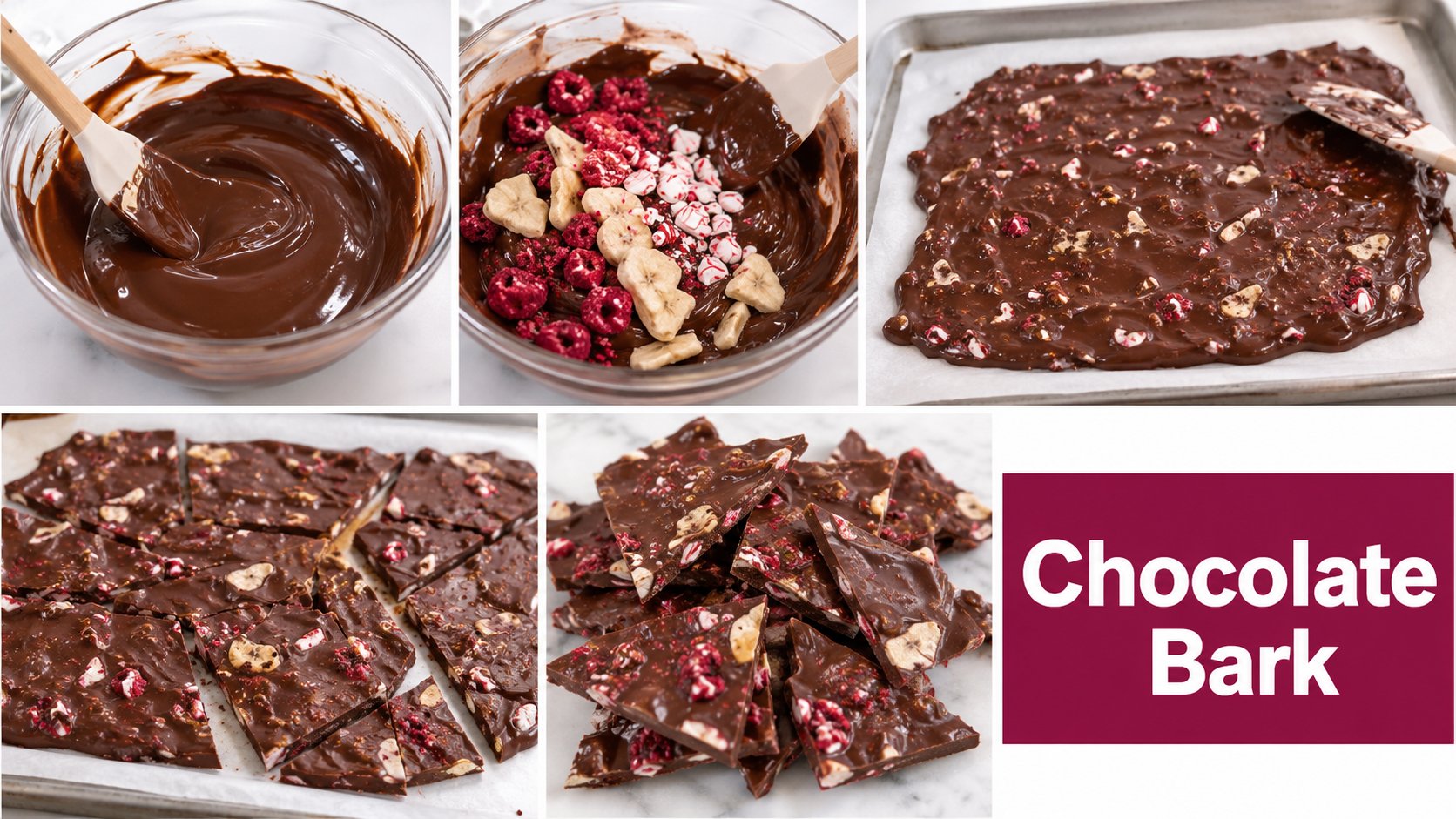
- Melt: Warm chocolate gently.
- Temper: Control and adjust the temperature so cocoa butter forms stable crystals.
- Mix: Fold in dry fruit or candy, reserve inclusions for the surface.
- Spread and set: Pour onto a lined tray, let firm, then break into pieces.
Tempering helps bark look glossy, snap cleanly and resist fat bloom, the pale mottling caused by unstable cocoa butter crystals. Fresco's bark is tempered. Untempered bark is convenient but may look duller or soften more readily at room temperature.
Store bark in an airtight container in a cool, dry place. Chill bark made with fresh fruit and eat it promptly.
How the Chocolate Base Shapes Each Bite
Dark chocolate can balance sweet candy or tart fruit. Milk or white chocolate gives inclusions a sweeter base. Taste a plain piece of chocolate next to one with inclusions to notice the difference. Using quality chocolate made with minimal, quality ingredients with enhance the bark flavor and not mask flavors with excess sugar, over processing or added ingredients.
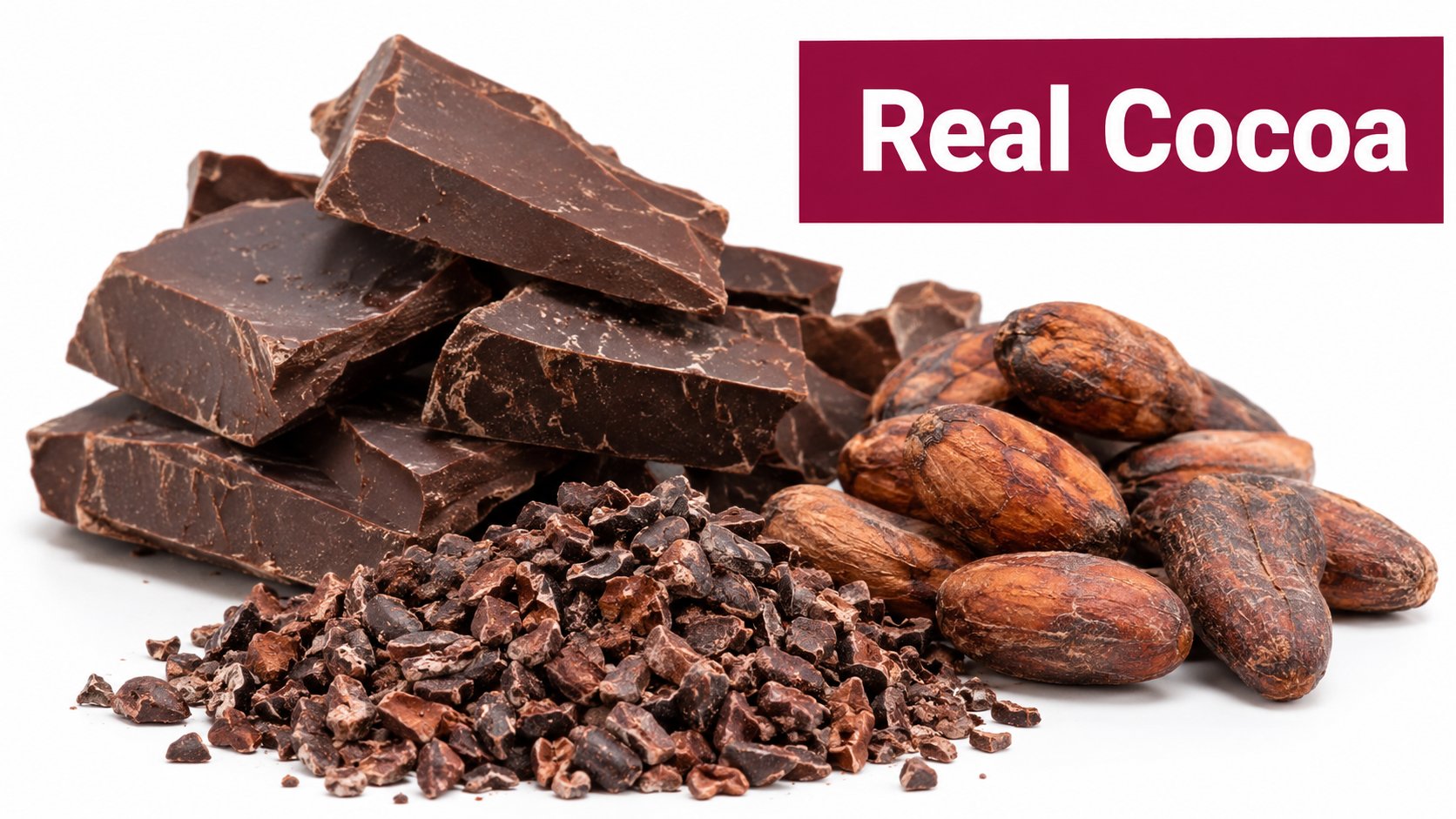
Roast affects flavor, too. An IOP conference paper on cocoa roasting describes how roasting conditions vary. Fresco's notes on cocoa bean roasting and flavor development provide more detail.
Why Use Freeze-Dried Fruit?
Freeze-drying removes much of a fruit's water, concentrating its flavor and making it easier to mix into chocolate. Keep freeze dried ingredients sealed until use so it does not absorb humidity. Freeze dried fruit in bark, like raspberries, have a much longer shelf life and more intense flavors than bark made using fresh or dried fruit. As a practical example, we ran a test by freeze drying 10 pounds of fresh raspberries. The result was about one pound of freeze-dried raspberries. The process eliminated nine pounds of water and concentrated 10 pounds of raspberry flavor into just one pound.
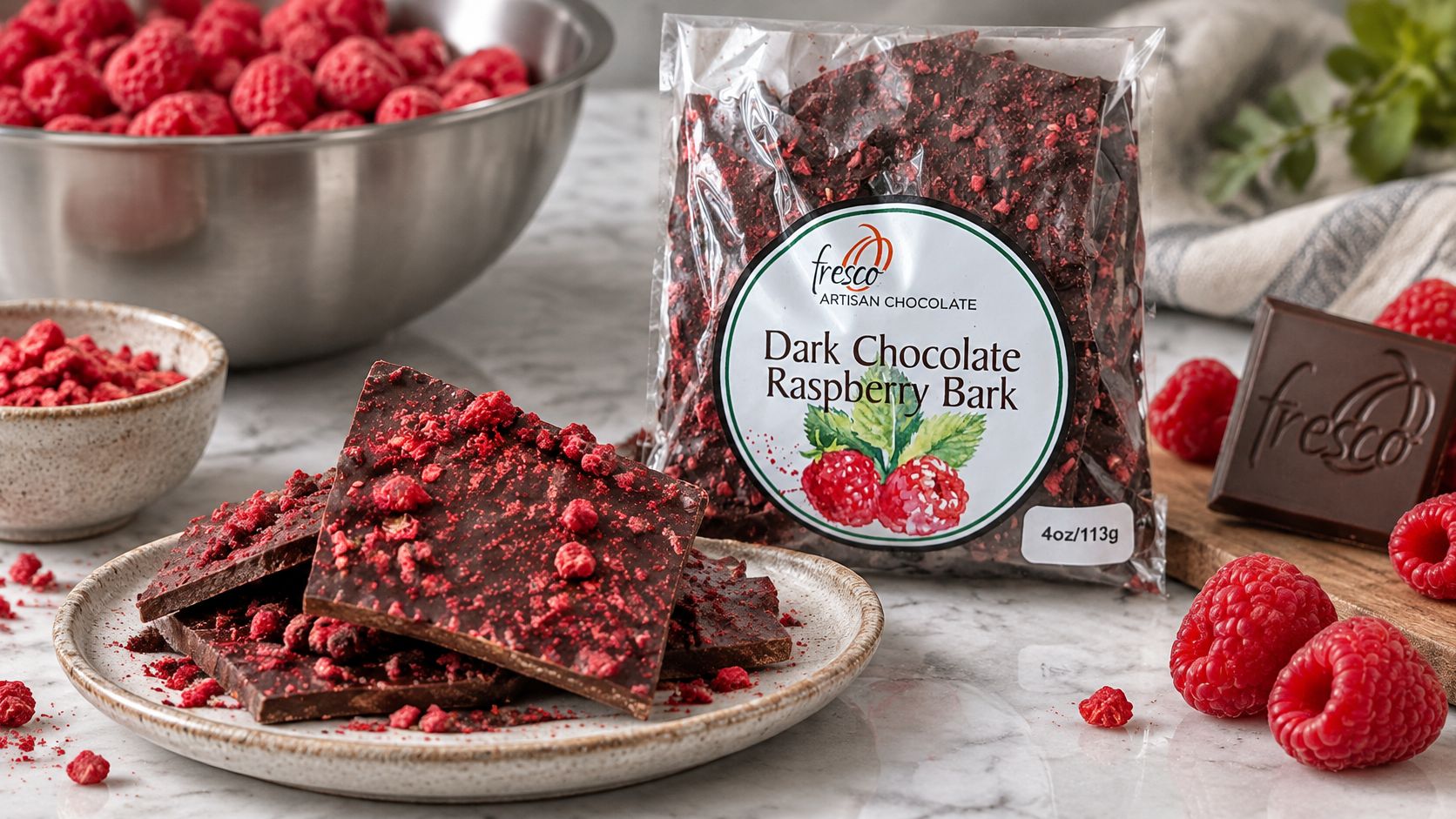
Fresco's Raspberry Bark combines Dominican Republic dark chocolate with freeze-dried raspberries. Its ingredients are organic cocoa beans, organic cane sugar, organic cocoa butter and raspberries. The raspberries are mixed into the chocolate.
Fresco's Dark Chocolate Banana Bark pairs Ghana 70% chocolate with freeze-dried banana for concentrated fruit sweetness and a bit of crunch.
Compare plain chocolate, mixed-in fruit bark and bark with inclusions on the surface. Fresco's guide on how to taste chocolate suggests breaking a piece, smelling it and letting it melt slowly.
Fresco Chocolate roasts, refines and hand wraps its artisan chocolate in the Pacific Northwest of the United States. Explore Fresco Chocolate to compare bark with plain chocolate.